On May 12, 2026, Future Market Insights released a projection that should be read as a market signal, not just another statistic: the global circular plastic feedstock traceability market will grow from $252 million in 2026 to $1.46 billion by 2036, at a compound annual growth rate of 19.2%.
The figure is striking. But what explains it is far more interesting.
What the report says
According to the study, the growth is driven not only by regulatory pressure and circular economy targets. The real engine is a concrete operational need: companies require audit-ready data, mass-balance verification and traceable recycled content across global plastic supply chains.
Circular feedstock traceability solutions are evolving from sustainability tracking systems into operational infrastructure platforms that connect procurement, production, certification and reporting. It is no longer about approximating tonnages. It is about demonstrating, point by point, what materials enter, what processes transform them and what circularity attributes exit.
Why it matters now
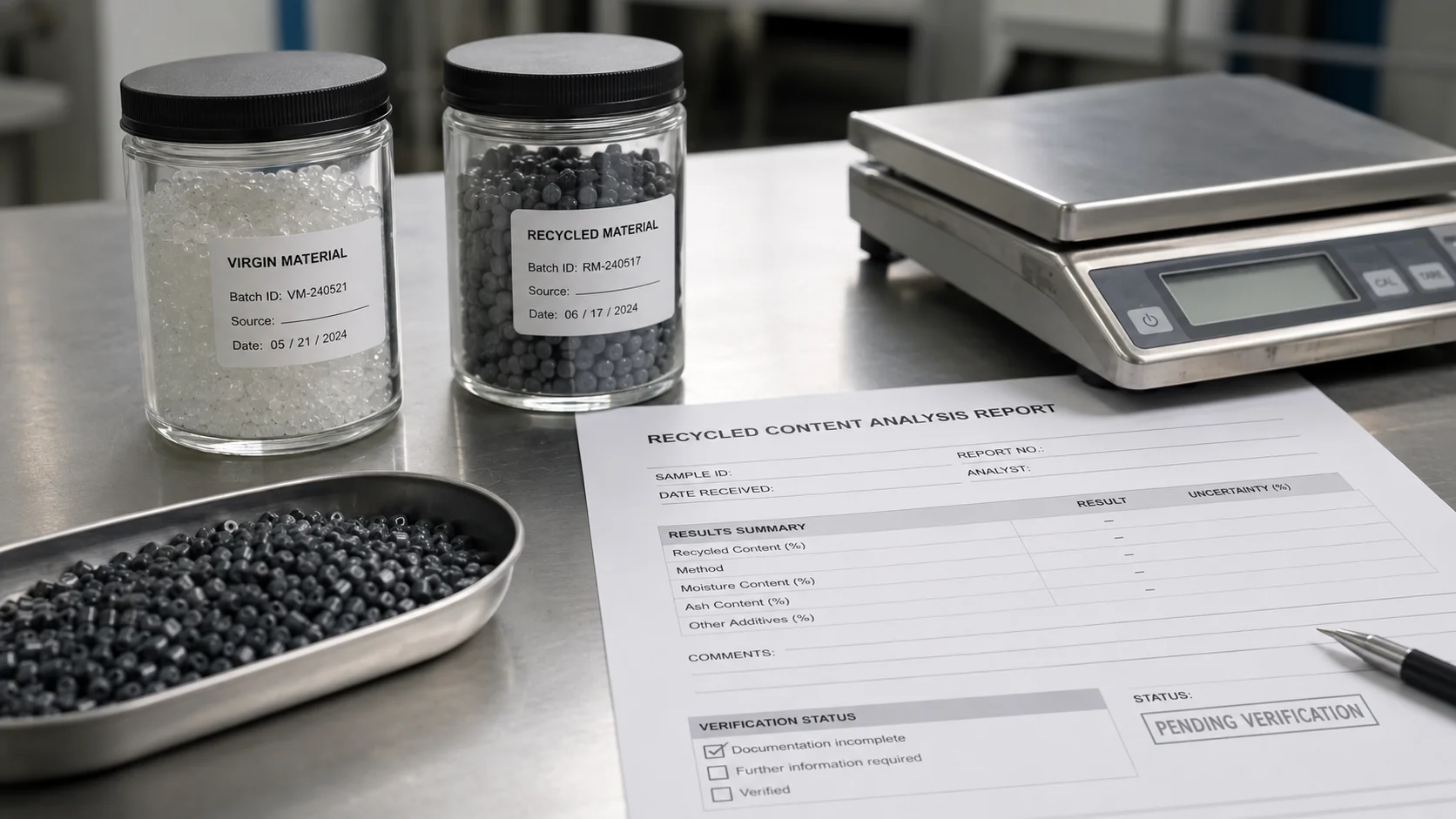
Recycled plastic is ceasing to be a green alternative and becoming a verifiable commodity. When a manufacturer buys recycled resin, they do not just want a percentage certificate. They want to be able to defend that claim before an auditor, a B2B customer or a market authority.
And that shift changes everything.
Circularity no longer rests on statements of intent, annual reports or estimated balances. It rests on chained evidence: material origin, intermediate treatments, custody transfers, certifications and analysis results. Every link must be verifiable, and the whole must be defensible as a coherent sequence.
Operational implication
For companies in the sector, this means traceability is no longer a parallel compliance cost. It becomes part of the commercial infrastructure. Procurement cannot buy without evidence. Production cannot process without recording. Certification cannot issue without auditing. And reporting cannot consolidate without attributable data.
The operational problem is not a lack of information. The data exists: in ERPs, quality systems, supplier certificates, plant records, lab reports. The problem is that this information rarely forms a defensible evidence chain when challenged.
The Averiun perspective
This is exactly the space where Averiun operates.
It does not add more sensors or more spreadsheets. What it does is convert the operational data that already exists —receipts, weighings, treatments, transfers, certifications— into a verifiable subject-centric history, where each event is linked to its issuer, its sequence, its governance rules and its sharing context.
In a circular plastics case, the traceable subject can be a batch of recycled feedstock, a composite material or a waste stream destined for valorization. Every transformation, every custody handover, every validation is recorded as an event in a microledger. The result is not just more visibility: it is an evidence layer that enables circularity claims to be defended before third parties without exposing the entire chain.
Because the difference between information and evidence becomes critical when the value of a product depends on proving its origin.
Conclusion
The growth projected by FMI is not a market fad. It is confirmation that the circular economy is entering a maturity phase where promises are no longer enough. Companies need traceability that withstands audit, certification and external review.
It is not about having more data. It is about making that data stand as proof.
Sources:
- Future Market Insights / Access Newswire, via Morningstar: "Circular Plastic Feedstock Traceability Market to Reach USD 1,460.0 Million by 2036", May 12, 2026. Link

Written by
Sergio Lugo· CEO
Writes about traceability, operations, and how data veracity becomes a real competitive advantage.


